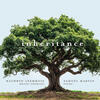
Inheritance

Album cover featuring a large leafy tree along with the title "Inheritance"

Inheritance

Kathryn Leemhuis, mezzo-soprano
Samuel Martin, piano

Inheritance will be available for streaming and download on all major platforms on Friday, November 13, 2026. Physical CD sales will be available on Bandcamp.

Inheritance is a collection of contemporary American art songs for mezzo-soprano and piano exploring the intertwined landscapes of childhood and parenthood, where innocence and experience are reflected through the other’s eyes. Composers Eric Whitacre, Lori Laitman, David Sisco, Juliana Hall, Matthew Recio, Evan Mack and Jason Weisinger offer deeply personal meditations on imagination, love, loss and legacy.

Across these songs, lullabies give way to prayers, letters and dreams, expressing intimate portraits of what it means to nurture, to remember and to hold on. The album celebrates modern art song as a living, breathing medium for storytelling: tender, humorous and profoundly human. In a time when memory and connection feel fragile, this music reminds us that the bonds between parent and child — and perhaps between artist and listener — remain some of the most enduring forms of enchantment.

Eric Whitacre’s Goodnight Moon transforms Margaret Wise Brown’s beloved bedtime story into a musical moment of disarming simplicity and beauty. The familiar text, set to Whitacre’s signature harmonic radiance, becomes both a lullaby and a benediction. We experience both a farewell to innocence and a gesture of eternal comfort, just as a parent brings to their child. In this context, Goodnight Moon speaks not only to the child being soothed to sleep, but to the parent seeking peace in letting go.

Lori Laitman’s The Imaginary Photo Album traces the arc of parenthood through four intimate vignettes, each drawn from a poet’s sharply observed moment of love, awe and memory. From the first fluttering image of life in an ultrasound to the quiet ritual of a lullaby, the cycle captures the fragile wonder of early connection. She turns that intimacy outward with a portrait of shared imagination and fear, where music becomes both story and mirror. Then moments turn into reflection: a parent looking back through the lens of time, discovering that photographs cannot contain what memory still holds. Laitman’s music binds these scenes with lyric warmth and clarity, illuminating how the ordinary acts of care and recollection become the true “album” of a life.

David Sisco’s Dear God offers a set of short, whimsical prayers voiced by children which are equally earnest, funny and touchingly sincere. Sisco’s music mirrors the humor and innocence of each supplication with exquisite sensitivity, allowing laughter and wonder to coexist in the same phrases. In the context of the album, Dear God offers a moment of sweetness, embracing the naïve depth that children often unknowingly bring to the things they say.

Juliana Hall’s Songs of Enchantment, with texts drawn from Walter de la Mare’s poetry, invites the listener into a realm where childhood wonder and dreamlike imagination merge. The music shimmers with delicacy and mystery, capturing the fleeting sensations of a child’s world: its playfulness, its fears and its quiet awe. Hall’s settings bridge the seen and unseen, suggesting that enchantment is not only for the young, but for any heart still capable of wonder.

Matthew Recio’s Tales of Imagination celebrates the boundless creativity of youth and the transformative power of storytelling. Exploring Willy Wonka, Alice in Wonderland, and James and the Giant Peach, his bold harmonic palette and rhythmic energy evoke the wonder and unpredictability of these three distinct characters from children’s literature. Yet beneath its whimsy lies a profound recognition of how imagination sustains us as both escape and empathy, throughout the arc of growing up.

Evan Mack’s Ode to Parenthood closes the album with a contemporary and often humorous reflection on the daily realities of raising children. Through its spirited rhythms and candid, irreverent text, Mack balances affection with honesty, showing the exhaustion, joy, absurdity and grace of parenthood. His writing captures the tender chaos of modern family life, grounding the album’s ethereal moments in the profoundly human and relatable.

Jason Weisinger’s i carry your heart sets e.e. cummings’ timeless poem with tenderness and wonder. The text set to Weisinger’s steady heartbeat figure signifies an unbreakable, lifelong bond and profound emotional connection between parent and child. The phrases express that a child is an essential, permanent part of a parent, and vice-versa, no matter the physical distance; and as the final unresolved chord drifts away, the listener experiences a musical representation of that eternal connection.

These works form a mosaic of tenderness, humor and vulnerability that reflects an homage to human connection, and a love that is essential to our existence. For a parent, a child's presence gives their life meaning, and the thought of them is a life-sustaining force; for a child, the parent is a constant, foundational presence in the child's life. We invite listeners to hear themselves in every lullaby and letter, every fragment of imagination and memory, reminding us of our own generational bonds.

--Kathryn Leemhuis and Samuel Martin

From the Composers

Eric Whitacre: Goodnight Moon

Over the first six years of his life, I must have read “Goodnight Moon” to my son a thousand times, maybe more. Somewhere around reading number 500 I began hearing little musical fragments as I read, and over time those fragments began to blossom into a simple, sweet lullaby. I knew it was a long shot, but I asked my manager, Claire Long, to contact HarperCollins and see if they would allow the text to be set to music. To my surprise and delight they agreed – the first time they had ever allowed Goodnight Moon to be used in such a way. I composed the piece relatively quickly, setting the text for harp, string orchestra, and my son’s mother, soprano Hila Plitmann. I later created a version for soprano and piano, SATB choir and piano and finally, SSA choir and piano.

--Eric Whitacre

Lori Laitman: The Imaginary Photo Album

The Imaginary Photo Album was commissioned for soprano Katharina Konradi by BBC Radio 3 and the Royal Philharmonic Society.

The poems are A.E. Stallings, an American poet currently living in Greece, who was a 2011 MacArthur Fellow; 19th century American poet Eugene Field, and American poet Joyce Sutphen, former Poet Laureate of Minnesota. The title of the cycle is taken from Joyce’s poem The Imaginary Photo Album.

All the poems provide glimpses of childhood from a mother’s point of view — starting with the excitement and wonder at viewing the very first ultrasound; continuing with the sweet sounds of an infant’s lullaby; the expressions of wonder, thrill and fear of a toddler as he listens to Prokofiev’s Peter and the Wolf; and finally, to wistful memories brought back to life by old photographs.

Each song is quite distinctive in mood. “Ultrasound” has a quick pace throughout, underscoring the quickness of the fetal heartbeat. I have made extensive use of word painting: metaphorical imagery of a butterfly is found in the opening piano gesture, as the treble and bass expand and contract in contrary motion before resting on repeated pitches. A motivic cell, set to the interval of a fourth, pervades the piece, and is first heard with the opening words “what butterfly.” Later musical images include the piano’s low register to suggest the atmosphere of a cave, and melismatic vocal lines combined with a descending piano line to conjure up images of vertebrae as well as strung beads. The song ends with solo voice, leading directly to the a cappella lullaby.

“Little Blue Pigeon” (aka Japanese Lullaby) uses both a melismatic vocalise and humming to create an illusion of accompaniment, distinct from the delivery of text. The 9/8 meter creates the rocking feeling so necessary for a lullaby, and the implied harmonies support the emotional subtext.

“Listening to Peter and the Wolf with Jason, Aged Three” presented a musical challenge in that I incorporated quotations from Prokofiev’s masterpiece, but these famous themes (duck/oboe, cat/clarinet, wolf/horns, Grandfather/bassoons, Peter/strings) are referenced in the poem in a much quicker succession than in the original music. The puzzle was solved by melding these with my own music, thus preserving their identity while allowing me to use them in the order they appear in the poem.

The opening gesture of “The Imaginary Photo Album”, a rising arpeggio in the piano, conjures a feeling of nostalgia by referencing the style of an old-fashioned song. The interruption of this gesture immediately changes the picture — suggesting a suspension of time — appropriate for reminiscing.

The cycle closes with the voice wordlessly referencing motifs from all the songs. I created the mezzo-soprano version in December 2024 for this album.

--Lori Laitman

(“Ultrasound” from Hapax: Copyright © 2006 by A.E. Stallings. Published 2006 by Northwestern University Press. All rights reserved. “Listening to Peter and the Wolf, with Jason, Aged Three” from Olives Copyright © 2012 by A.E. Stallings. Published 2012 by TriQuarterly Books/Northwestern University Press. All rights reserved. “The Imaginary Photo Album” by Joyce Sutphen, First Words, ©2009 Red Dragonfly Press, Red Wing, Minnesota. Used by permission of the author.)

David Sisco: Dear God

Dear God was written for soprano Tami Petty, mezzo-soprano Sarah Lambert, and pianist Howard Watkins, and premiered at a recital at Marble Collegiate Church in 2004. Tami had forwarded me an email of children's prayers to God—one of those charming chains we used to send to each other back in the early 2000s—and asked if I might write a song cycle to close their recital. Knowing both of their voices well, along with their wonderfully quirky senses of humor, I was happy to oblige.

Each of the prayers has such a distinct voice that it was easy to imagine a specific musical world for each song. The brevity of the texts also meant that I could polish off a couple songs in a single day, which was a real treat (God knows that's rarely my process...). I continue to marvel at the wonder, complexity, and precociousness of these texts and attempted to strike a balance between simplicity in the text setting and giving them a potent, distilled voice.

--David Sisco

Matthew Recio: Tales of Imagination

From librettist Jenna Lanzaro: “When we're kids, we want to be bigger, and the world feels huge and all possible. Then we grow up, and we think magic is behind us. Tales of Imagination is a series of poems based on children's stories-- "James and the Giant Peach," "Alice in Wonderland," and "Charlie and the Chocolate Factory"-- exploring magic through the juxtaposition of big and little. Huge fruit and warehouses against baby's breath and buttons: maybe magic is the strange way these things talk, the let-go of our need to make sense.”

Tales of Imagination is a song cycle that explores the fantastical inner worlds of iconic characters from beloved childhood stories. Librettist Jenna Lanzaro delves into their psyches through prose, giving voice to Alice (Alice in Wonderland), James (James and the Giant Peach), and Willy Wonka (Charlie and the Chocolate Factory).

Each character is bound by a shared sense of grandeur—a longing to transcend the ordinary and reshape reality through imagination. James, though only a young boy, yearns to escape the confines of his world at any cost. His movement extends beyond his own desire for escape to examine the insects who accompany him on his journey. Suddenly transformed into human-sized beings, these creatures are forced to experience life on a scale utterly foreign to them. Having survived by listening to nature and responding instinctively to the cues of their environment, they now find themselves thrust into a perilous quest for survival, led—ironically—by a child. Encased within the larger-than-life peach, they confront a material world governed by unfamiliar rules, where intuition gives way to uncertainty. Their survival carries a quiet mysticism, rooted in a deep reliance on nature even as the rules of life and perception irrevocably change.

Alice seeks to experience existence from perspectives unattainable in the ordinary world, slipping between scales of size, logic, and identity in her pursuit of understanding. There is a sense of whimsy in this movement, reflected in a shuffle-inspired piano backdrop over which the lyrical vocal line floats and soars in wonder. As Alice’s perceptions dissolve and reform, the music itself begins to evaporate, the movement’s conclusion fading into the air as though the entire experience had been a dream.

Willy Wonka imagines and creates an entire world made of chocolate—a realm born purely of invention and excess, where fantasy becomes tangible reality. In the final movement, a profound calmness emerges, evoking a dreamlike state marked by innocence and quiet vulnerability. Willy Wonka appears to gaze toward the stars, asking for the gift—and the secret—of creation, something to be preserved and passed on to others. This vision is reflected in the refracted piano accompaniment: expansive, lyrical, and stratified, unfolding in gentle layers. Imagination here becomes both refuge and offering, shaped not only by brilliance, but by tenderness.

Together, these portraits reveal imagination not as escapism, but as a powerful, transformative force—one that reshapes identity, challenges perception, and redefines the boundaries between the natural and the fantastical.

--Matthew Recio

Juliana Hall: Songs of Enchantment

I completed my composition studies with renowned American vocal composer Dominick Argento, who, among other things, had an encyclopedic knowledge of literature…and it was he who introduced me to the poetry of the great English poet Walter de la Mare (1873-1956). I instantly fell in love with de la Mare’s beautifully lyrical poetry, most especially his fantastical and incredibly imaginative and vivid children’s poetry…and I also fell in love with musical settings of his poetry, particularly by his fellow Englishman Benjamin Britten…so early on I came to feel that I, also, wanted to write some songs on de la Mare’s poems.

My opportunity came soon enough, when I received a Guggenheim Fellowship in 1989 to compose for a year…and I made the most of the opportunity. Among the six compositions I wrote that year were Bells and Grass (5 songs for soprano and oboe), Peacock Pie (20 songs for tenor and piano), and Songs of Enchantment (10 songs for soprano or mezzo-soprano and piano), all on poems by Walter de la Mare. The poems I set in Songs of Enchantment truly are just that…enchanting. From cats and talking fish, ghosts and witches, scenes of children engaging in games, and a child’s careful observations of the world around him, these poems are, by turns, fanciful, charming, humorous, endearing, otherworldly, and mysterious, all seen through a child's gentle innocence. Walter de la Mare also imbues much of his children’s poetry with an element of darkness that captures a child’s innate understanding that in this world not all is happiness and sunshine…yet de la Mare’s world is nevertheless a safe one, a world that gathers children’s attention by taking them on a journey of discovery - sometimes fun, sometimes frightening - but always returning them home safely by dinnertime.

I am thrilled and honored for Kathryn Leemhuis and Sam Martin to record Songs of Enchantment as part of this, their second, album together. They have performed these songs with striking and subtle beauty, and with an attention to detail that really captures the spirit of Walter de la Mare’s poetry, and I am eternally grateful for their dedication to these songs and for sharing their considerable artistry with me.

--Juliana Hall

(Daybreak; Away Go We; Double Dutch; The Spotted Flycatcher; The Ride-by-Nights; Company; Alas, Alack!; Hide and Seek; Silly Sallie; and A Song of Enchantment used by permission of the Literary Trustees of Walter de la Mare and the Society of Authors as their representative.)

Evan Mack: Ode to Parenthood

Parenting: the only job where your boss is half your size, doesn’t pay you, and frequently screams for snacks.

In Ode to Parenthood, Evan Mack turns the chaos, comedy, and quiet profundity of raising children into music that feels both universal and deeply personal. Drawing entirely from real quotes about parenting — from the deadpan to the divine — the piece traces the arc from early idealism (“I was the greatest parent in the world… until I had kids”) to that bittersweet moment of letting go (“There are only two lasting gifts we can give to our children: roots and wings”).

Along the way, we meet the toddler-as-blender, the three-year-old-as-middle-finger, the parent who can’t sit down without being needed or begins negotiating with a child who refuses to wear pants. It’s funny because it’s true and moving, because every parent has been there — elbow-deep in toys, time, and love.

Like a stand-up routine wrapped in choral warmth, Ode to Parenthood celebrates the absurdity and beauty of family life. It laughs with you, sighs with you, and ultimately leaves you with that universal truth: no one ever really figures parenting out — and that’s exactly what makes it worth singing about.

--Evan Mack

Jason Weisinger: i carry your heart

ee cummings’ i carry your heart has always held deep meaning for me. I wrote this setting in 2016 after celebrating the wedding of two of my closest college friends, Kyle and Kateri—the first time our circle had been together since school. In the years between, I had faced health challenges and the disillusionment that can come from chasing a career in performance. That weekend reminded me what it felt like to be surrounded by love again—to feel connected, understood, and alive in music.

It was also the first art song I ever wrote—the first time I set another person’s words to music. Around that time, Rufus Wainwright released Take All My Loves: 9 Shakespeare Sonnets, an album that felt like a revelation. Having already loved Songs for Lulu, I was struck by how fearlessly he allowed classical, pop, and theatrical worlds to coexist. Hearing that album helped me realize that an art song didn’t need to sound any particular way—it could simply sound like itself.

The music of i carry your heart holds both joy and ache: the tenderness of loving someone you can’t always hold, and the acceptance that love is real even in absence. Writing from that place of acceptance taught me the same about composition—to stop shaping my music into what I thought it should be and instead let it sound however it wanted to sound. In doing so, I found something honest, heartfelt, and unguardedly human. I hope this piece helps you do the same.

--Jason Weisinger

Song Texts

Goodnight Moon

Music by Eric Whitacre
Authored by Margaret Wise Brown

In the great green room
There was a telephone
And a red balloon
And a picture of –
The cow jumping over the moon

And there were three little bears sitting on chairs
And two little kittens
And a pair of mittens
And a little toyhouse
And a young mouse
And a comb and a brush and a bowl full of mush
And a quiet old lady who was whispering “hush”

Goodnight room
Goodnight moon
Goodnight cow jumping over the moon
Goodnight light
And the red balloon

Goodnight bears
Goodnight chairs
Goodnight kittens
And goodnight mittens

Goodnight clocks
And goodnight socks
Goodnight little house
And goodnight mouse

Goodnight comb
And goodnight brush
Goodnight nobody
Goodnight mush
And goodnight to the old lady whispering “hush”

Goodnight stars
Goodnight air
Goodnight noises everywhere

The Imaginary Photo Album: Ultrasound

Music by Lori Laitman
Poetry by A.E. Stallings

What butterfly —
Brain, soul, or both —
Unfurls here, pallid
As a moth?
(Listen, here's
Another ticker,
Counting under
Mine, and quicker.)
In this cave
What flickers fall,
Adumbrated
On the wall?
Spine like beads
Strung on a wire,
Abacus
Of our desire,
Moon-face where
Two shadows rhyme,
Two moving hands
That tell the time
I am the room
The future owns,
The darkness where
It grows its bones.

The Imaginary Photo Album: Little Blue Pigeon

Music by Lori Laitman
Poetry by Eugene Field

Sleep, little pigeon, and fold your wings —
Little blue pigeon with velvet eyes;
Sleep to the singing of mother-bird swinging —
Swinging the nest where her little one lies.
Away out yonder I see a star —
Silvery star with a tinkling song;
To the soft dew falling I hear it calling —
Calling and tinkling the night along.
In through the window a moonbeam comes —
Little gold moonbeam with misty wings;
All silently creeping, it asks: “Is he sleeping —
Sleeping and dreaming while mother sings?”
Up from the sea there floats the sob
Of the waves that are breaking upon the shore,
As though they were groaning in anguish, and moaning —
Bemoaning the ship that shall come no more.
But sleep, little pigeon, and fold your wings —
Little blue pigeon with mournful eyes;
Am I not singing? — see, I am swinging —
Swinging the nest where my darling lies.

The Imaginary Photo Album: Listening to Peter and the Wolf with Jason, Aged Three

Music by Lori Laitman
Poetry by A.E. Stallings

Eyes wide open, grinning ear to ear,
Balanced between the thrill of fear and fear,
He clutches at my skirt to keep me near.
And will not let me leave him by himself
In the living room where Peter and the Wolf
Emerges from the speakers on the shelf.
He likes Peter’s jaunty swing of strings,
The reedy waddle of the duck, the wings
That flute up in the tree, but still he clings,
(Even though for now it’s just the cat
Picking its sneaky way through sharp and flat);
He isn’t frightened of a clarinet,
And laughs at Grandfather’s bluster and bassoon,
But keeps his ear out for another tune
At the shadowy edge of the wood, and coming soon.
Where is the wolf? He asks me every chance
He gets, and I explain each circumstance;
Though it’s not as if he’s heard it only once —
You’d think he’d know by now. Deep in the wood,
Or under the tree, or sent away for good
To the zoo, I say, and think he’s understood.
And weary of the question and the classic,
I ask him where the wolf is. With grave logic
He answers me, “The wolf is in the music.”
And so it is. Just then, out of the gloom
The cymbal menaces, the French horns loom.
And the music is loose. The music’s in the room.

The Imaginary Photo Album: The Imaginary Photo Album

Music by Lori Laitman
Poetry by Joyce Sutphen

The photographs I have taken of you—
one shutter at a time—are scattered now
from one house to another. I meant to
put them all in books and write down how
old you were when we went to Yellowstone
and the names you had for the little bear
we bought when you were scared to be alone.
I’m worried that no one will recognize where
you were standing in this one; they won’t see
the yard of our first house or your father’s
father (the one you called Gaffer) as he
is pushing up his glasses to watch your
face as you open the present they’ve brought,
the look of happiness the camera caught.

Dear God

Music by David Sisco
Words by anonymous

1. Joyce
Dear God,
Thank you for my baby brother,
But what I asked for is a puppy.
I’ve never asked for anything before.
You can look it up.

2. Charles
Dear God,
I don’t think anybody could be a better God than you.
Well, I just want you to know that.
And I’m not just saying that because you’re already God.
Amen.

3. Peter
Dear God, 
Please send Dennis Clark to a different summer camp this year.

4. Allison
God, I read the Bible.
What does beget mean?
Nobody will tell me.
Love, Allison

5. Barbara
Dear God,
If you watch in church on Sunday,
I’ll show you my new shoes.
Barbara.

6. Dennis
Dear God,
My grandpa says you were around when he was a little boy.
How far back do you go?

7. Carrie
Dear God,
Maybe Cain and Abel would not kill each other so much
If they each had their own rooms.
It works out okay for me and my sister.

8. Frank
Dear God,
I’m doing the best I can.
Really.

9. Charlene
Dear God,
How did you know you were God?
Who told you?

10. Norma
Dear God,
Did you mean for giraffes to look like that?
Or was it an accident?
Love, Norma

11. Jeff
Dear God,
It is great the way you always get the stars in the right place.
Why can’t you do that with the moon?

12. Thomas
Dear God,
I didn’t think orange went with purple
Until I saw the sunset Tuesday night.
That was really cool.

Tales of Imagination: James and the Giant Peach

Music by Matthew Recio
Poetry by Jenna Lanzaro

What we really want,
What we really, really want
Is for nature to tell us what to do.

We want skin so filled and uncreased
That we know something enormous has got to be inside.

We know that fists or peach pits
Do this to the covering of most hearts,
And maybe there are glass ornaments
Inside other parts of our bodies.
But what we have instead
Is the boy like a toy soldier,
Stamping across the giant peach
And trying to think of a plan.

We know...

Tales of Imagination: Alice in Wonderland

Music by Matthew Recio
Poetry by Jenna Lanzaro

We are too big to love flowers,
Our hands built for spoons and buttons,
And noses of lion wide cities smells,
And not the tinkle of baby’s breath.

When we read about flowers
And look at them painted,
We know of our want to be miniature
And not vast like everyone seems to have thought.

Imagine straw fine legs
Taking us through gardens of flowers,
Darkening out the sun.

Tales of Imagination: Charlie and the Chocolate Factory

Music by Matthew Recio
Poetry by Jenna Lanzaro

Warehouses or milky ways
Are good places to start.
First we must be sure
That they’re big enough
For what we’re thinking of.

And then we can make
Whatever we’ve dreamed
The night before,
Out of chocolate or scarves;
With the intent to pull our guests
Into ever deepening rooms.

Passing on the street,
They will wonder …
At the thing which was
So easy to start.

Songs of Enchantment: Daybreak

Music by Juliana Hall
Poetry by Walter de la Mare

The curtains of the solemn night
Draw back; and daybreak fair
Shines on these tulips cold with dew,
And fills with light the air.
No child stands tiptoe yet to sip
Clear water from the fountain’s lip;
Nothing stirs anywhere,
But the birds in the dust, the leaves in the breeze,
The nut-brown squirrels in the trees;
And empty is every chair.

Songs of Enchantment: Away Go We

Music by Juliana Hall
Poetry by Walter de la Mare

One, two, three,
And away go we!
Shingle, starfish,
Sand, and sea!
Wind on cheek,
Clear sun on skin;
The tumbling waves
Sweep out, sweep in.
A magic, broken
Music calls
In the water
As it falls;
Voices, a sigh,
A long-drawn hush,
As back—in myriad
Bubbles—gush
The green-grey ripples,
Flecked with snow—
A music solemn,
Sweet, and low.

Songs of Enchantment: Double Dutch

Music by Juliana Hall
Poetry by Walter de la Mare

That crafty cat, a buff-black Siamese,
Sniffing through wild wood, sagely, silently goes,
Prick ears, lank legs, alertly twitching nose,
And on her secret errand reads with ease
A language no man knows.

Songs of Enchantment: The Spotted Flycatcher

Music by Juliana Hall
Poetry by Walter de la Mare

Gray on gray post, this silent little bird
Swoops on its prey—prey neither seen nor heard!
A click of bill; a flicker; and, back again!
Sighs Nature an Alas? Or merely, Amen?

Songs of Enchantment: The Ride-By-Nights

Music by Juliana Hall
Poetry by Walter de la Mare

Up on their brooms the Witches stream,
Crooked and black in the crescent’s gleam;
One foot high, and one foot low,
Bearded, cloaked, and cowled, they go.
’Neath Charlie’s Wain they twitter and tweet,
And away they swarm ’neath the Dragon’s feet,
With a whoop and a flutter they swing and sway,
And surge pell-mell down the Milky Way.
Between the legs of the glittering Chair
They hover and squeak in the empty air.
Then round they swoop past the glimmering Lion
To where Sirius barks behind huge Orion;
Up, then, and over to wheel amain
Under the silver, and home again.

Songs of Enchantment: Company

Music by Juliana Hall
Poetry by Walter de la Mare

There must be ghosts, I think, in this old house.
Often, when I am alone,
The quiet intensifies;
The very air seems charged with mute surmise;
I pause to listen, with averted eyes;
As if in welcome. And a passionate rapture,
As if at some thing long since pondered on,
Wells suddenly up within me... Then is gone.

Songs of Enchantment: Alas, Alack!

Music by Juliana Hall
Poetry by Walter de la Mare

Ann, Ann!
Come! quick as you can!
There’s a fish that talks
In the frying-pan.
Out of the fat,
As clear as glass,
He put up his mouth
And moaned ‘Alas!’
Oh, most mournful,
‘Alas, alack!’
Then turned to his sizzling,
And sank him back.

Songs of Enchantment: Hide and Seek

Music by Juliana Hall
Poetry by Walter de la Mare

Hide and seek, says the Wind,
In the shade of the woods;
Hide and seek, says the Moon,
To the hazel buds;
Hide and seek, says the Cloud,
Star on to star;
Hide and seek, says the Wave
At the harbour bar;
Hide and seek, say I,
To myself, and step
Out of the dream of Wake
Into the dream of Sleep.

Songs of Enchantment: Silly Sallie

Music by Juliana Hall
Poetry by Walter de la Mare

Silly Sallie! Silly Sallie!
Called the boys down Blind Man’s Alley;
But she, still smiling, never made
A sign she had heard, or answer gave;
Her blue eyes in her skimpy hair
Seemed not to notice they were there;
Seemed still to be watching, rain or shine,
Some other place, not out, but in:
Though it pleased the boys in Blind Man’s Alley
Still to be shouting Silly Sallie!

Songs of Enchantment: A Song of Enchantment

Music by Juliana Hall
Poetry by Walter de la Mare

A Song of Enchantment I sang me there,
In a green—green wood, by waters fair,
Just as the words came up to me
I sang it under the wild wood tree.
Widdershins turned I, singing it low,
Watching the wild birds come and go;
No cloud in the deep dark blue to be seen
Under the thick-thatched branches green.
Twilight came; silence came;
The planet of evening’s silver flame;
By darkening paths I wandered through
Thickets trembling with drops of dew.
But the music is lost and the words are gone
Of the song I sang as I sat alone,
Ages and ages have fallen on me—
On the wood and the pool and the elder tree.

Ode to Parenthood

Words and Music by Evan Mack

I was …
I was,
I was the greatest …
I was the greatest parent in the world,
Until,
Until I had kids!

My friend asked me recently:
“Hey, what’s the most difficult part of being a parent?”
Without a shadow of a doubt,
It’s the kids!

Raising kids is part joy
And part guerilla warfare …
One obstacle,
One obstacle after another.
‘Cause no one ever puts anything away!

A two-year old is kinda like having a blender,
Without a top!
A three-year old is basic’lly
A walking, talking middle finger!

Ah, to be a mom …
Mom … mmmm
Maaa,
Mom! Mom!
Mummy! Mummy!
MOM!

The quickest way to get a child’s attention
Is to sit down and look comfortable!

Mom, mom, mom … mommy.

Before becoming a parent …
I didn’t know,
I didn’t know that I could ruin someone’s life
By asking them to put on pants.

You wake up extra early
So you and your kids can be twenty minutes late
Wherever you go.
“Hello … yes, 
We’re gonna be late,
‘Cause my kid decided
To zip his/her own jacket.”

Little boys will break your arm.
Little girls will shit in your heart.
When your children are teenagers,
It’s important to have a dog
So that someone in the house is happy to see you.

Being a mom
Has made me so tired,
And so happy.

If I had to do it over again,
I’d fingerpaint more
And point the finger less.
I’d do less correcting 
And more connecting,
Less tugging,
More hugging,
Be firm less often,
And affirm much more …
And kiss them goodnight, 
Even though they’re already asleep.

There are only to lasting gifts
We can give to our children;
One of these is roots,
The other wings!

i carry your heart

Music by Jason Weisinger
Poetry by e. e. cummings

i carry your heart with me(i carry it in
my heart)i am never without it(anywhere
i go you go,my dear;and whatever is done
by only me is your doing,my darling)
                                                      i fear
no fate(for you are my fate,my sweet)i want
no world(for beautiful you are my world,my true)
and it’s you are whatever a moon has always meant
and whatever a sun will always sing is you

here is the deepest secret nobody knows
(here is the root of the root and the bud of the bud
and the sky of the sky of a tree called life;which grows
higher than soul can hope or mind can hide)
and this is the wonder that's keeping the stars apart

i carry your heart(i carry it in my heart)

Production Credits

Recorded August 2025 at Temple Performing Arts Center, Philadelphia, PA

BCM&D Founder and Executive Producer: Robert Stroker
Producer: David Pasbrig
Recording/Mixing/Mastering Engineer: David Pasbrig
Assistant Sound Producer: Paul Scholten
Assistant Engineer: Abby Almas (student, MS Music Technology)
Design: Greg Gonyea